YayBlogger.com
BLOGGER TEMPLATES

Monday, May 7, 2012

Herbal Aphrodisiacs

Ah, Eros. Love has many forms, but romantic love... well, when it's right... is pretty nice. And even though I'm a single person I'm going to teach you how to get your mojo on. (Hey! I know this stuff from books, okay?)

Anyway, ahem, for all the love birds out there: roses, chocolates, and candlelight dinners are classic tools for romance. There's also aphrodisiacs: "love-inducing" foods or substances. Most have surely heard of popular food aphrodisiacs, such as chocolate, oysters, and tomatoes. What's interesting is that among desire-inducing foods, are herbs. Some people are skeptical as many aphrodisiac "claims" are not scientifically proven -- and this is true -- but just as food and herbs nourish us, they also affect our bodies (e.g., Dandelion as a diuretic).  Herbs are a delight to our senses, and they heal us, but many throughout history relied on certain herbs to enhance...well... passion. The most ancient love potions were derived from herbs and flowers (and, according to Folklore, were usually gathered on Midsummer's Eve).

Not sure how to get your mojo on with herbs? Well, there are many known herbal aphrodisiacs, but the most common ones will be mentioned. Don't be so shy and read on, this is knowledge!

                                               
Garlic and Asparagus. 

Garlic (Allium sativum): Now, you wouldn't think "garlic breath" to be a turn-on, but garlic has gained quite the reputation for being a passion-inducing herb. The ancient Greeks and Egyptians believed it, anyway.

Parsley (Petroselinum hortense): Google "parsley aphrodisiac" and the results speak for itself! Indeed, Parsley is a known herbal Aphrodisiac, as the seeds are claimed to stimulate sexual glands and fertility. Some websites recommend Parsley as an aphrodisiac for women, specifically. (Caution: pregnant women should not use parsley and parsley products, especially the essential oils. Consult a doctor.)

Asparagus (Asparagus officinalis):  It makes your urine stink, but eating asparagus is not only very tasty and good for you, it's a known aphrodisiac, too. Nicholas Culpeper, an herbalist from the 17th century, wrote that the tasty asparagus "stirs up lust in man and woman."  Some websites claim asparagus boosts histamine production, which aids the ability to um, well, just see this website.

Sweet Basil (Ocimum basilicum): Its fresh scent is intoxicating, and apparently I'm not the only one who thinks so, because it was said to "drive men wild" to the point that women would sprinkle their bosoms with it! Often used in pasta dishes, it has been used as an aphrodisiac for centuries. Basil is another herb claimed as a "love food"; in ancient Rome, basil was a symbol of love.

For more information, check it!

Herbal Aphrodisiacs From World Sources by Clarence Meyer


Sunday, April 22, 2012

Dandy Dandelions

My affinity for nature began when I was a child. It was during my childhood that love for certain bright yellow wildflowers began; those happy flowers you could twist into crowns, and wear in your hair. A member of the Asteraceae (Sunflower) family, the perennial wildflower commonly known as Dandelions (Taraxacum officinale) -- strangely hated as it is abused and poisoned by gardeners every Spring -- has fabulous medicinal properties.

Dandelion in my garden. 


Honeybee on a Dandelion in my garden. 

Dandelions are an important food source for honeybees, and as mentioned, herbalists regard Dandelions as having excellent medicinal properties. Notably, it has a reputation as a diuretic and was used historically as such (with names such as "pis-en-lit" - lol), and is also used to treat bile and liver problems. Dandelions also have culinary uses, as young greens -- packed with vitamin A -- are added to salads. Its roots can be ground and used as a coffee substitute, too.

Caution is advised here, see disclaimer. Dandelions closely resemble other plants, so it's very important to identify correctly. Dandelions have no branches or central stalk and the leaves are not fuzzy. Consult an expert (i.e., herbalist, or Naturopath) before consuming this plant. Teas are available at health stores and online.

For more information, please see:

Edible and Medicinal Plants of the West by Gregory Tilford
Dandelion info at Alternative Nature Online Herbal

Saturday, March 17, 2012

Mullein

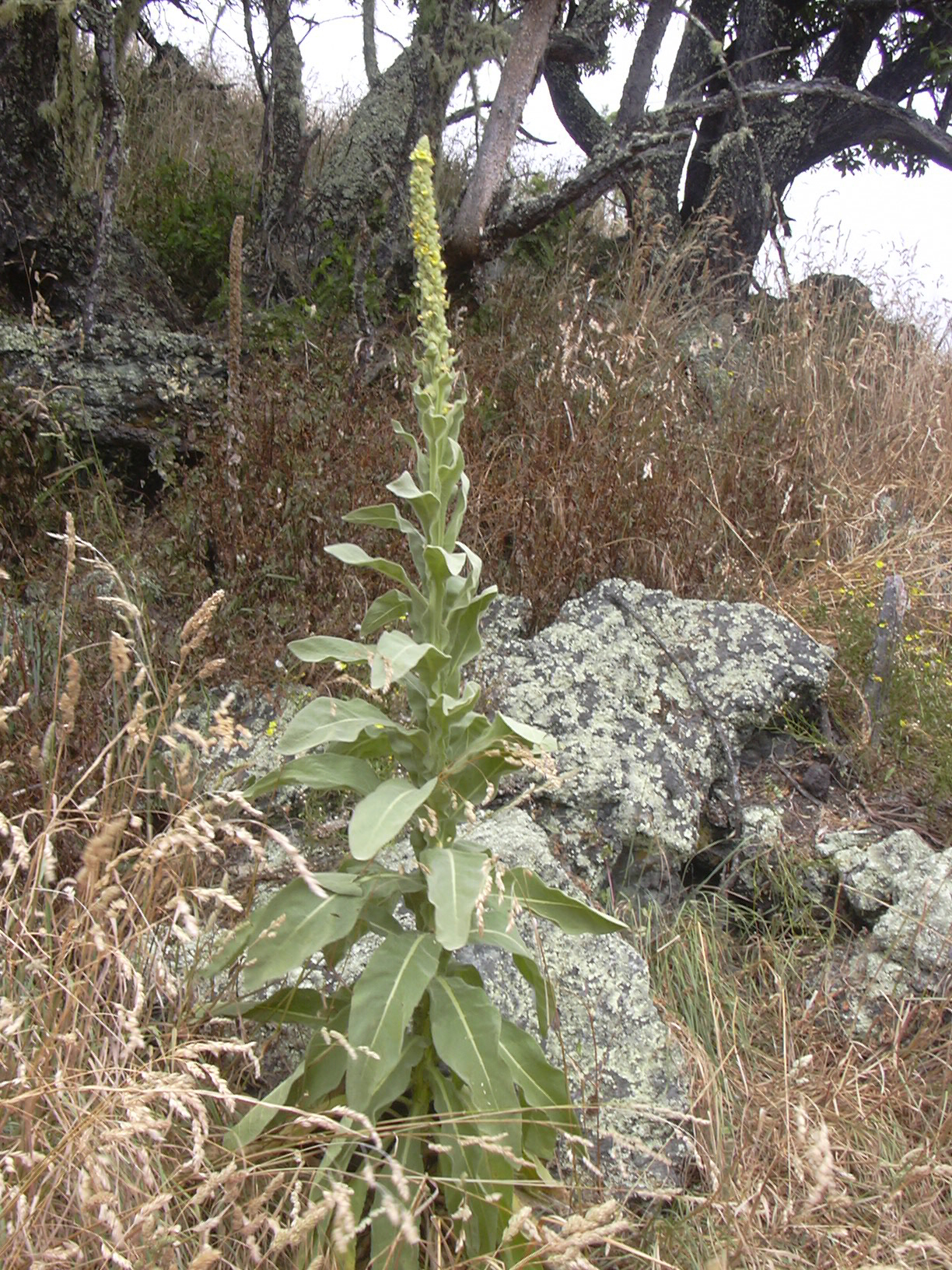
An unusual plant was growing in my garden. It wasn't until last summer, though, that it became interesting; I had never seen a plant like it before. It grew into a very tall plant, was single-stemmed, and had large, fuzzy leaves. Its curious flowers were yellow in color, clustered around the tip of the plant.

File:Starr 040723-0030 Verbascum thapsus.jpg
Photo Source Wikipedia.

After it flowered, though, the plant died, which meant it was a biennial.

One evening, as I read Gregory L. Tilford's Edible and Medicinal Plants of the West, I was surprised to see the plant on page 102. Its actual name is Mullein (Verbascum thapus), and it is a medicinal plant used by herbalists (and by Native Americans, historically). When I was sick a month ago, I was also surprised that Mullein is one of the ingredients in Quantum Health's Elderberry Syrup.

Mullein is said to possess strong antimicrobial properties, and is used to treat ear infections, as well. It is also used to relieve congestion, and teas can be purchased online. An infusion of Mullein can be used as a brightening hair rinse for fellow blondes (future self-experiment and blog post!).

According to Tilford's book, while adverse side-effects haven't been noted with Mullein, the seeds are toxic and should never be consumed under any circumstances. In large enough doses the plant can prove to be toxic due to the substances oumarin and rotenone. Don't mess around with this plant without the consultation of an expert, mmmkay?

This post was written for educational purposes only, please see my disclaimer. Consult a doctor before using any herb.

For more reading, see Gregory L. Tilford's Edible and Medicinal Plants of the West
Mullein info at Drugs.com
Mullein info at Alternative Nature Online Herbal


Sunday, February 12, 2012

Dragons ♥

Dragons! I love dragons.

My ancestors, the Celts, revered them. I cried at the end of Dragonheart. The Dragonriders of Pern is next on my reading list. And I enjoy making dragon-oriented jewelry:


Photos (c) S. Waters. 
Please contact me via email if you'd
like a specialty pair.

Oh, and to set the record straight: Dragons aren't evil. They're just misunderstood!


Sunday, February 5, 2012

Fight a Cold with Herbs

Warning: Excessive whining ahead.


This last week, I was really sick. The congestion led to sinusitis. Needless to say, I was miserable. Boohoo! Finally after arming myself with herbs, after a week my energy is returning and I'm starting to feel better.

Indeed, I fought through the illness using some herbal treatments. Tea tree essential oil steam inhalations proved to help tremendously, but herbs that I consumed in the form of syrups, teas, and in soups helped me the most. Fascinated, I researched certain herbs that are known or believed to fight the Common Cold -- there's quite a few of them -- and I'm sharing the knowledge of some of the herbs I researched.

Garlic: This tasty herb -- Allium sativum -- believed to ward off vampires in folkloric tales (and make your breath stinky), is known to have powerful antimicrobial (bacterial, viral, fungal) properties for a variety of illnesses. In controlled placebo studies, Garlic proved to prevent the Common Cold, as well as reducing recovery time and symptom duration for the famed group of rhino viruses. In studies, Garlic tablets also enhanced Natural Killer cells -- a type of Lymphocyte --  in battles against pathogens.

Onion: Although its medicinal uses are unproven, Onion -- Allium cepa -- is used in folk medicine, Chinese medicine, and Indian medicine. It is used to treat the Common Cold, as well as many other illnesses due to believed antimicrobial properties.

Echinacea: Used by Native Americans, Echinacea is a popular herb used in the prevention and treatment of colds and flus, however, Echinacea has also been exploited in commercial use. Three species of Echinacea are used medicinally: Echinacea angustifolia, Echinacea pallida, and Echinacea purpurea. It is important to note that there are differences in the three species, and Echinacea purpurea is considered to be the most potent. However, the plant is not a cure-all, nor does it work miracles. That said, I can personally attest that in my experience, I've found Echinacea to be a reliable herb. I've taken it in bottled extracts and teas. The good Echinacea extracts, taken in droplets, produces a tingling sensation on the tongue. Some people experience side effects to Echinacea (allergic and gastrointestinal).

Elderberry: I have a personal interest and passion for Elderberry, and I'm currently studying it. Oregon has its own wonderful native variety of Elder (Sambucus Cerulea) but Sambucus Nigra (the European Elder) is used in many commercial syrups. Actually, the syrup I used while ill -- Quantum Health Elderberry Syrup -- contains Sambucus Nigra. Elderberry is known to aid sore throats, coughs, and sinus infections. There's some caution to be advised here. Never, ever eat Red elderberries as they are considered toxic. Don't eat unripe berries of the blue Elderberries, either, and don't consume the leaves and stems, as they are also considered toxic. Please be careful when messing with this plant. If you want to use it medicinally, go to the store to buy the syrup or, better yet, see a doctor or nautropath beforehand. Don't try to treat yourself by berry picking.

Anise: The dried fruit parts of Pimpinella anisum is used to treat the Common Cold, Fevers, and inflamations of the mouth. It was used by the ancient Egyptians, Greeks, and Romans, and the Romans would use Anise in cakes called Mustacae, eaten after meals to prevent indigestion. Anise can be taken in teas. It is not to be used during pregnancy. According to naturalist William Turner in 1551, "Anyse maketh the breth sweter and swageth payne" (Source). Great teas can be purchased online.


This post was written for educational purposes only.

Some sources:

Ct. PDR for Herbal Medicines. June 2006 pNA.
Botanical.com
"Top 5 herbs to battle cold and flu viruses" from Examiner.com

Sunday, December 18, 2011

Essential Oils and Perfumery

Recently, I was at the beauty salon. As I sat under the hair dryer, flipping through pages of some fashion magazine, something in particular caught my eye: the cost of an "orange scented" perfume. The magazine listed the cost as $225.00.

I don't remember the brand, but that price is outrageous! Why pay so much money for a fragrance? There's toxic ingredients in many perfumes, anyhow. According to the Environmental Working Group, many fragrances contain ingredients "that studies show may be linked to a variety of health problems, including allergies, skin reactions, endocrine/hormone disruption, and possibly even birth defects. Companies are not required to test cosmetics for safety before they are sold." Some of the bad stuff found in fragrances include phthalates, and artificial musks.

So, before you fork out a lot of money for something with potentially toxic ingredients, consider looking into making your own perfume using essential oils. I buy most of my essential oils from The Ananda Apothecary (excellent, high quality essential oils at a great price), and Portland's The Essential Oil Company (producing quality and pure oils since 1977). Essential oils --extracted from plants and plant materials -- are used medically in hospitals as well as in aromatherapy, but I also use them to make lip balms, lotions, and hand salves. Essential oils are therapeutic, and are known to have powerful healing benefits. Some essential oils (such as Rosa damascena) can be expensive, but the organic and quality oils are the best, and worth every penny.

It's important to dilute the essential oils with other ingredients, such as vodka (if making a perfume), carrier oils, water, etc. Making my own fragrances has become quite the hobby; I enjoy inventing recipes while using raw and natural ingredients (such as cleaned organic orange peels).

(If you decide to try this, however, do so at your own risk: Some people experience allergic reactions to essential oils and even essential oil perfumes, so it's a good idea to be cautious, and not give them to other people as gifts. Never use essential oils while pregnant, and don't apply essential oils directly to the skin. Always be careful when using a mixture for the first time. Some types, such as Bergamot, can provoke a reaction even when diluted. Research the subject well before diving into it - it's a lot of fun to read about!)

For a basic start to the subject, check out:

The Essential Oils Book: Creating Personal Blends for Mind and Body by Colleen Dodt

 The Complete Book of Essential Oils and Aromatherapy, by Valerie Ann Worwood.


Sunday, October 16, 2011

Literary Cooking

Reminiscing on the books read from childhood, I wonder about the foods mentioned in them. I know there's Monday mornings when I could use some rejuvenating Lembas bread, but did you ever wonder if you could handle eating an entire chocolate cake, as ordered by Ms. Trunchbull in Matilda? While reading Anne of Green Gables, did you ever wonder what the heck Anne Shirley thought she was giving her bosom buddy Diana Barry, who ended up drunk because she was really drinking currant wine? Or, from The Lion, the Witch, and the Wardrobe, did you imagine Turkish Delight to be like ambrosia, since Edmund sold his fam out for it?


Legolas about to om-nom Lembas bread.

Well, thanks to a cute book titled Turkish Delight & Treasure Hunts: Delightful Treats and Games from Classic Children's Books, you can make some of these interesting creations yourself!  I stumbled upon a blog post written by Emily and Katie mentioning the book and these foods from fiction, and I was so intrigued by their post that I bought the book myself (sure, you can find the recipes via Google, but I love me some unusual cookbooks!).

I have to admit: Turkish Delight -- the real thing -- isn't how I imagined it. It looks like Aplets and Cotlets, which I'm not a fan of. The real stuff from Turkey is supposed to be sheer Elysium. According to recipes I've seen, its main contents include rosewater, cornstarch, foodcoloring, and sugar. Going by looks alone, it doesn't seem very appealing, but I'm going to make some, anyway. Apparently you can dip them in chocolate, too, and well, chocolate makes everything better.

Making foods from fiction is a charming idea; of course, the bread and jam that Frances would only eat is a no brainer, and Stone Soup would be tasty... minus the stones, that is. There is also an awesome Trunchbull Chocolate Cake recipe found on the World Wide Web! I do hope that one would pass on the Green Eggs and Ham, though. Ick.

For reference, check out the cookbooks:

Turkish Delight & Treasure Hunts: Delightful Treats and Games from Classic Children's Books by Jane Brocket

Roald Dahl’s Revolting Recipes by Roald Dahl, Felicity Dahl, and Josie Fison  (many recipes in this book do not seem...appetizing)

The Anne of Green Gables Cookbook by Kate MacDonald