YayBlogger.com
BLOGGER TEMPLATES

Saturday, June 16, 2012

Salmonberry Jam

After visiting Dabney state park for a hike, and seeing the golden Salmonberries (Rubus spectabilis) dispersed throughout the Sandy River's landscape, I was really excited to get my jam-making groove on and make a batch. The berries are simply beautiful with colors ranging from gold to salmon to scarlet.  Salmonberries were an important food source for northwest Tribes; historically, Native Americans ate the sprouts peeled, or steam cooked the sprouts with dried salmon. Rubus spectabilis served medicinal purposes as well for Native Americans.

For two days I hiked around the area to pick them -- carefully avoiding Stinging Nettle and spiders -- and after all that foraging, I couldn't wait to turn the berries into a jam, and spread the stuff on my toast.

Salmonberry at Dabney State Park, Oregon.


As for the flavor of Salmonberries, well, they vary in taste, and can be described as "insipid." While they've never had that "wow" factor for me, I never thought they were flavorless (in my experience, the taste can range from semi-sweet to "woodsy", but they can have a strange aftertaste).

Once picked, Salmonberries can get mushy. While not as delicate as Thimbleberries, they're best eaten right away, and I've read berry books (Janie Hibler's The Berry Bible) that state making a jam with them isn't recommended. Contrary to this, though, others have had success. I don't often use pectin when making jam, but I did use it while using this recipe.


Fresh Salmonberries, ready for jam-making.


Well, I finally made a batch, and as I tasted it, I felt a little disappointed. The flavor isn't bad per se, but it's  just.. meh. As with their fresh form, the jam likewise has that same interesting aftertaste... something I can't really pinpoint, but it's a bit of a bitter taste that sugar can't completely conceal. A different batch may yield a better flavor, but my culinary conclusion is that, while aesthetically appealing and also edible, Salmonberries don't make the best jam. Perhaps mixing the Salmonberries with another member of the Rubus genus (e.g., raspberries) would aid in making a better and tastier jam.

And yet, the soon-to-ripen Thimbleberry will be available (and those berries are simply delicious), so I'm starting to feel excited to forage once again.

For more information, please check out the book, Wild Berries of the West by Betty B. Derig and Margaret C. Fuller.

Wednesday, May 23, 2012

What's in your beauty products?

Looooong story ahead.

In 2004, I spent some time in Alaska, going to college at UAA studying archaeology. An Irish person such as myself does not have the skin meant for arctic weather, because my skin changed for the worse: my hands were itchy, and my skin cracked and bled. My hands looked so bad that I was wearing cloth mittens everywhere, even indoors. I was suffering and it sucked. I actually thought I had some kind of flesh-eating bacteria. A visit to the dermatologist allowed a diagnosis: eczema, but she just prescribed corticosteroids and sent me on my (unmerry) way (thanks, doctor whomever, for prescribing Prednisone, as that stuff IS POISON). Ahem, anyway. The air is very dry in Alaska, and the prescribed Prednisone, as well as skin lotions, wasn't helping, either.

When I returned home to Oregon, my eczema greatly regressed but it was still bothersome from time to time. I then visited an excellent dermatologist and this doctor helped me understand eczema (and my many allergies). Through my own research and managing the eczema, I came to the understanding that while I always had slight eczema  I have very sensitive skin, and that most soap products bother me.  Any soap product with Sodium Lauryl Sulfate notably causes my eczema to flare up with a vengeance. Therefore, my shampoos and soaps are, of course, free of sulfates. I can't do the dishes without rubber gloves, as dish-washing liquid is murder on my hands. My SLS-free soaps are purchased from soapmakers, and from Trader Joe's.

My experiences eventually led me to the million-dollar question: what's with all the "questionable ingredients" in consumer products, anyway? What's with the labels that scream "Sulfate free" and "Free of parabens" and "Phosphate-free"? A visit to the Environmental Working Group website yields answers to what these ingredients are and informs you of what's in your own products.

Some of the basics:

Sulfates (i.e., the above mentioned Sodium Lauryl Sulfate) are found in just about every cleaner, from garage-floor cleaners to shampoos to soaps to toothpaste. (Yes, you read that correctly: stuff that is used to clean garage floors is also put into your toothpaste and shampoo.) This is the stuff that creates lather in a soap, and as a surfactant, it's good at removing oils from your hair and body. It is also known to be a skin irritant, especially for those who have sensitive skin and eczema. According to Bonnie Rochman's Time  Health article Ingredient Anxiety, another concern regarding Sulfates is that "some of these foaming agents are skin irritants; others combine with petrochemicals to form 1,4-dioxane, which is a probable human carcinogen."

Parabens are found in many beauty products, including cosmetics, deodorants, shampoos, and hair products, and is used as a preservative and anti-fungal agent. Have a look at the label on the back of a hair product, perhaps one that you own and use. Do you see "methyparaben", perhaps? The problem with parabens is that they mimic estrogen; lab tests have indicated endocrine-disrupting compounds. According to the Environmental Working Group, parabens "were found in breast cancer tumors of 19 out of 20 women studied." Scary.

Phthalates are found in a variety of products, including fragrances, cosmetics such as eyeshadow, liquid soaps, nail polish, shower curtains, and more. The Environmental Working Group website states, "Phthalates have been found to disrupt the endocrine system" by affecting sperm counts and reproductive systems in male animals, and studies indicate (U.S. Center for Disease Control’s 2005 National Report on Human Exposure to Environmental Chemicals) it is also linked to liver cancer. Also frightening is that most personal care products don't list phthalates on labels, according to The Campaign for Safe Cosmetics.

Other nasty ingredients include but isn't limited to Bisphenol A (BPA),  DMDM hydantoin, Phosphates, and 1,4-dioxane.

Consumers are unknowingly spending money (sometimes, a lot of money) on products containing these harsh ingredients.

Due to my own need for soaps without SLS, I've decided to jump on the soap-making bandwagon. I'll be updating subsequent blog posts with my soap-making experiences. Eventually, the soaps that I'll make (and those that turn out decently enough) will be available for sale through my Etsy page. W00t.

For more information, please see:

Ingredient Anxiety written by Bonnie Rochman
The Environmental Working Group
The Campaign For Safe Cosmetics


All natural soooooap: including Triforce soap! W00t!


Monday, May 7, 2012

Herbal Aphrodisiacs

Ah, Eros. Love has many forms, but romantic love... well, when it's right... is pretty nice. And even though I'm a single person I'm going to teach you how to get your mojo on. (Hey! I know this stuff from books, okay?)

Anyway, ahem, for all the love birds out there: roses, chocolates, and candlelight dinners are classic tools for romance. There's also aphrodisiacs: "love-inducing" foods or substances. Most have surely heard of popular food aphrodisiacs, such as chocolate, oysters, and tomatoes. What's interesting is that among desire-inducing foods, are herbs. Some people are skeptical as many aphrodisiac "claims" are not scientifically proven -- and this is true -- but just as food and herbs nourish us, they also affect our bodies (e.g., Dandelion as a diuretic).  Herbs are a delight to our senses, and they heal us, but many throughout history relied on certain herbs to enhance...well... passion. The most ancient love potions were derived from herbs and flowers (and, according to Folklore, were usually gathered on Midsummer's Eve).

Not sure how to get your mojo on with herbs? Well, there are many known herbal aphrodisiacs, but the most common ones will be mentioned. Don't be so shy and read on, this is knowledge!

                                               
Garlic and Asparagus. 

Garlic (Allium sativum): Now, you wouldn't think "garlic breath" to be a turn-on, but garlic has gained quite the reputation for being a passion-inducing herb. The ancient Greeks and Egyptians believed it, anyway.

Parsley (Petroselinum hortense): Google "parsley aphrodisiac" and the results speak for itself! Indeed, Parsley is a known herbal Aphrodisiac, as the seeds are claimed to stimulate sexual glands and fertility. Some websites recommend Parsley as an aphrodisiac for women, specifically. (Caution: pregnant women should not use parsley and parsley products, especially the essential oils. Consult a doctor.)

Asparagus (Asparagus officinalis):  It makes your urine stink, but eating asparagus is not only very tasty and good for you, it's a known aphrodisiac, too. Nicholas Culpeper, an herbalist from the 17th century, wrote that the tasty asparagus "stirs up lust in man and woman."  Some websites claim asparagus boosts histamine production, which aids the ability to um, well, just see this website.

Sweet Basil (Ocimum basilicum): Its fresh scent is intoxicating, and apparently I'm not the only one who thinks so, because it was said to "drive men wild" to the point that women would sprinkle their bosoms with it! Often used in pasta dishes, it has been used as an aphrodisiac for centuries. Basil is another herb claimed as a "love food"; in ancient Rome, basil was a symbol of love.

For more information, check it!

Herbal Aphrodisiacs From World Sources by Clarence Meyer


Sunday, April 22, 2012

Dandy Dandelions

My affinity for nature began when I was a child. It was during my childhood that love for certain bright yellow wildflowers began; those happy flowers you could twist into crowns, and wear in your hair. A member of the Asteraceae (Sunflower) family, the perennial wildflower commonly known as Dandelions (Taraxacum officinale) -- strangely hated as it is abused and poisoned by gardeners every Spring -- has fabulous medicinal properties.

Dandelion in my garden. 


Honeybee on a Dandelion in my garden. 

Dandelions are an important food source for honeybees, and as mentioned, herbalists regard Dandelions as having excellent medicinal properties. Notably, it has a reputation as a diuretic and was used historically as such (with names such as "pis-en-lit" - lol), and is also used to treat bile and liver problems. Dandelions also have culinary uses, as young greens -- packed with vitamin A -- are added to salads. Its roots can be ground and used as a coffee substitute, too.

Caution is advised here, see disclaimer. Dandelions closely resemble other plants, so it's very important to identify correctly. Dandelions have no branches or central stalk and the leaves are not fuzzy. Consult an expert (i.e., herbalist, or Naturopath) before consuming this plant. Teas are available at health stores and online.

For more information, please see:

Edible and Medicinal Plants of the West by Gregory Tilford
Dandelion info at Alternative Nature Online Herbal

Saturday, March 17, 2012

Mullein

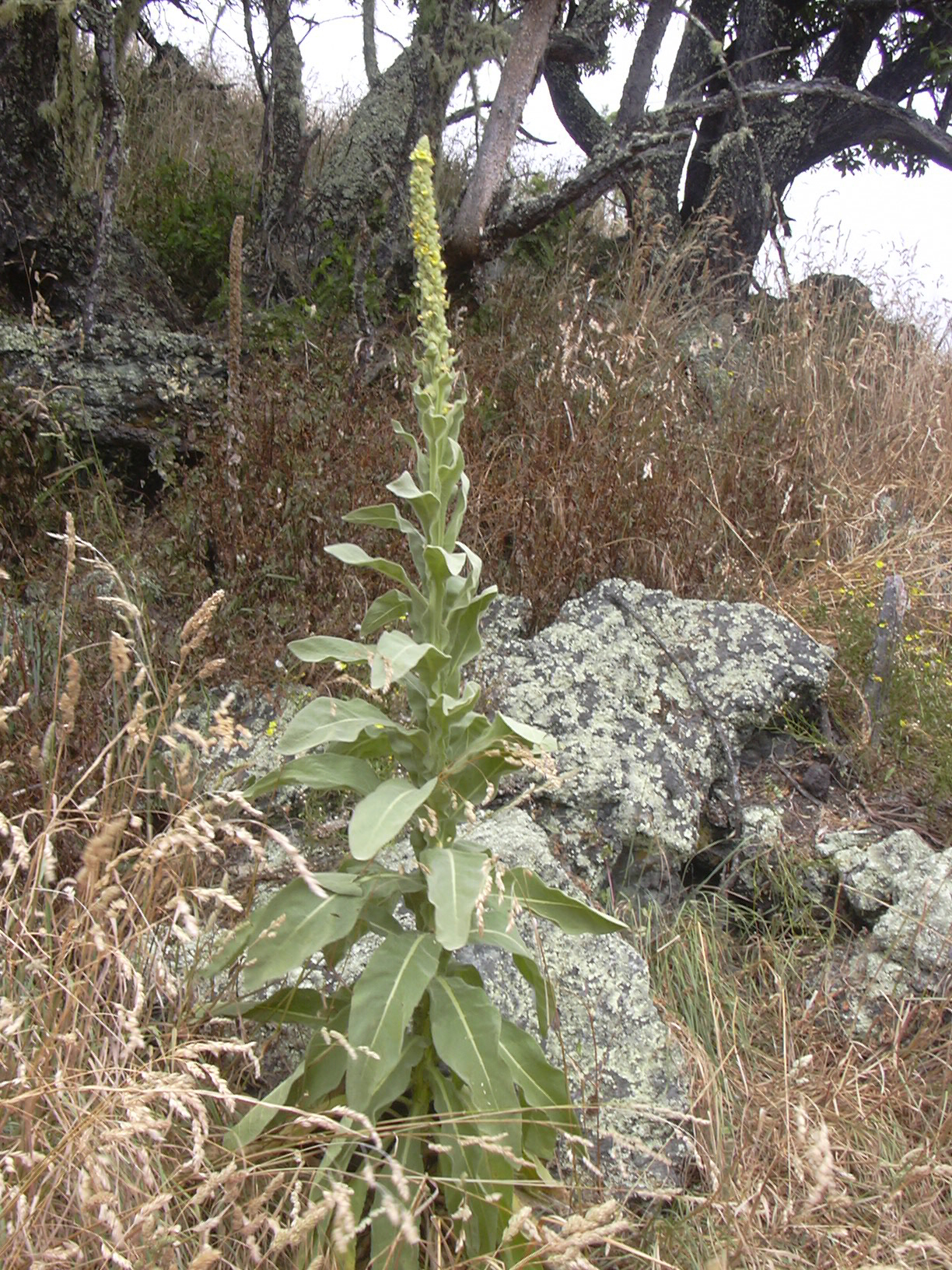
An unusual plant was growing in my garden. It wasn't until last summer, though, that it became interesting; I had never seen a plant like it before. It grew into a very tall plant, was single-stemmed, and had large, fuzzy leaves. Its curious flowers were yellow in color, clustered around the tip of the plant.

File:Starr 040723-0030 Verbascum thapsus.jpg
Photo Source Wikipedia.

After it flowered, though, the plant died, which meant it was a biennial.

One evening, as I read Gregory L. Tilford's Edible and Medicinal Plants of the West, I was surprised to see the plant on page 102. Its actual name is Mullein (Verbascum thapus), and it is a medicinal plant used by herbalists (and by Native Americans, historically). When I was sick a month ago, I was also surprised that Mullein is one of the ingredients in Quantum Health's Elderberry Syrup.

Mullein is said to possess strong antimicrobial properties, and is used to treat ear infections, as well. It is also used to relieve congestion, and teas can be purchased online. An infusion of Mullein can be used as a brightening hair rinse for fellow blondes (future self-experiment and blog post!).

According to Tilford's book, while adverse side-effects haven't been noted with Mullein, the seeds are toxic and should never be consumed under any circumstances. In large enough doses the plant can prove to be toxic due to the substances oumarin and rotenone. Don't mess around with this plant without the consultation of an expert, mmmkay?

This post was written for educational purposes only, please see my disclaimer. Consult a doctor before using any herb.

For more reading, see Gregory L. Tilford's Edible and Medicinal Plants of the West
Mullein info at Drugs.com
Mullein info at Alternative Nature Online Herbal


Sunday, February 12, 2012

Dragons ♥

Dragons! I love dragons.

My ancestors, the Celts, revered them. I cried at the end of Dragonheart. The Dragonriders of Pern is next on my reading list. And I enjoy making dragon-oriented jewelry:


Photos (c) S. Waters. 
Please contact me via email if you'd
like a specialty pair.

Oh, and to set the record straight: Dragons aren't evil. They're just misunderstood!


Sunday, February 5, 2012

Fight a Cold with Herbs

Warning: Excessive whining ahead.


This last week, I was really sick. The congestion led to sinusitis. Needless to say, I was miserable. Boohoo! Finally after arming myself with herbs, after a week my energy is returning and I'm starting to feel better.

Indeed, I fought through the illness using some herbal treatments. Tea tree essential oil steam inhalations proved to help tremendously, but herbs that I consumed in the form of syrups, teas, and in soups helped me the most. Fascinated, I researched certain herbs that are known or believed to fight the Common Cold -- there's quite a few of them -- and I'm sharing the knowledge of some of the herbs I researched.

Garlic: This tasty herb -- Allium sativum -- believed to ward off vampires in folkloric tales (and make your breath stinky), is known to have powerful antimicrobial (bacterial, viral, fungal) properties for a variety of illnesses. In controlled placebo studies, Garlic proved to prevent the Common Cold, as well as reducing recovery time and symptom duration for the famed group of rhino viruses. In studies, Garlic tablets also enhanced Natural Killer cells -- a type of Lymphocyte --  in battles against pathogens.

Onion: Although its medicinal uses are unproven, Onion -- Allium cepa -- is used in folk medicine, Chinese medicine, and Indian medicine. It is used to treat the Common Cold, as well as many other illnesses due to believed antimicrobial properties.

Echinacea: Used by Native Americans, Echinacea is a popular herb used in the prevention and treatment of colds and flus, however, Echinacea has also been exploited in commercial use. Three species of Echinacea are used medicinally: Echinacea angustifolia, Echinacea pallida, and Echinacea purpurea. It is important to note that there are differences in the three species, and Echinacea purpurea is considered to be the most potent. However, the plant is not a cure-all, nor does it work miracles. That said, I can personally attest that in my experience, I've found Echinacea to be a reliable herb. I've taken it in bottled extracts and teas. The good Echinacea extracts, taken in droplets, produces a tingling sensation on the tongue. Some people experience side effects to Echinacea (allergic and gastrointestinal).

Elderberry: I have a personal interest and passion for Elderberry, and I'm currently studying it. Oregon has its own wonderful native variety of Elder (Sambucus Cerulea) but Sambucus Nigra (the European Elder) is used in many commercial syrups. Actually, the syrup I used while ill -- Quantum Health Elderberry Syrup -- contains Sambucus Nigra. Elderberry is known to aid sore throats, coughs, and sinus infections. There's some caution to be advised here. Never, ever eat Red elderberries as they are considered toxic. Don't eat unripe berries of the blue Elderberries, either, and don't consume the leaves and stems, as they are also considered toxic. Please be careful when messing with this plant. If you want to use it medicinally, go to the store to buy the syrup or, better yet, see a doctor or nautropath beforehand. Don't try to treat yourself by berry picking.

Anise: The dried fruit parts of Pimpinella anisum is used to treat the Common Cold, Fevers, and inflamations of the mouth. It was used by the ancient Egyptians, Greeks, and Romans, and the Romans would use Anise in cakes called Mustacae, eaten after meals to prevent indigestion. Anise can be taken in teas. It is not to be used during pregnancy. According to naturalist William Turner in 1551, "Anyse maketh the breth sweter and swageth payne" (Source). Great teas can be purchased online.


This post was written for educational purposes only.

Some sources:

Ct. PDR for Herbal Medicines. June 2006 pNA.
Botanical.com
"Top 5 herbs to battle cold and flu viruses" from Examiner.com